New Mexico Pt. 2 White Sands National Park
- Macey VanDenMeerendonk
- Mar 31, 2022
- 3 min read

My day started with a 3-hour drive from Carlsbad, NM to White Sands National Park. The drive started out with small rolling hills and more of a desert look to it with mountains in the distance as I left the Carlsbad area. As I got closer to Lincoln National Forest the hills became a little bigger and cattle started to dot the landscape. These rolling hills continued with ranch after ranch lining the road and tucked away in the valleys. It was such a beautiful area! Soon the landscape grew in height with mountains and pine trees. The temperature dropped as I gradually drove up and I noticed it was snowing. I was a little surprised to see that, and that in some places there was snow already on the ground. As I reached the top of the mountains, a cute little town rested at the top (with surprisingly “cheap” gas, like $3.89 or something like that). Coming down seemed steeper but the views were beautiful, even caught a few glimpses of White Sands from up there. Soon I was going through Alamogordo, NM looking back at the gorgeous Sacramento Mountains I had just gone through.
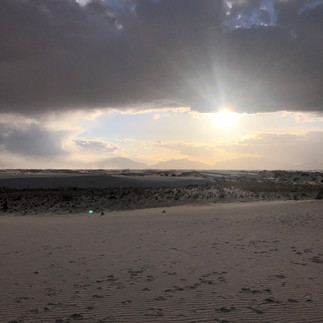
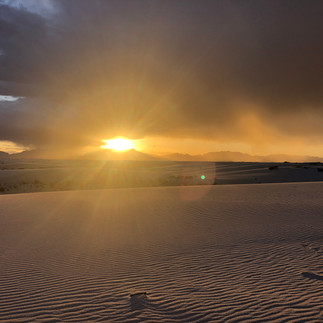
Once I made it to White Sands, I started driving the main road, Dunes Rd, and marveled at the stark white dunes that surrounded. I started at the Dune Life Nature Trail and walked the mile loop. Stormy skies loomed over Alamogordo and every once in a while I’d feel a few cold rain drops. The mile loop was a great introduction to the park with signs describing the habits of the animals found in this desert. As I drove along the park’s road I would stop at every pull out and walk a ways up the dunes to catch the amazing views of the San Andres Mountains. The ripples on the dunes and the shadow effect from the sun gave the dunes its classic look. The gypsum sand was soft and cool, and gave many visitors a thrill when they went sledding down the steeper dunes.
Every evening the park offers a ranger led sunset stroll where they give information and the history of the park. There was a better turn out than I would have thought since we could see rain rolling closer and closer to us. It was interesting to learn that the park didn’t become a national park until 2019. It's amazing how connected and delicate the ecosystem of this park is and that the plants and animals do so much to help each other survive. The intricacy of the process the gypsum sand is made and how it stays where it is was incredible and necessary to know when considering our contribution to climate change. The sand relies on the water table a few feet below ground to anchor it to where it is. Any interference to the water table will disrupt the drying process of the sand and potentially harm that anchor which keeps the sand in that location. I learned many valuable insights to this incredible ecosystem, which is one of a kind in the entire world! There is literally no place like White Sands.
Fun Fact: The White Sands can be seen from space!
Fun Fact: Gypsum is in many products we use/consume everyday, like: toothpaste, drywall, cheese, beer, etc. and we consume an average of 28lbs of it in our lives.
The rain came on and off throughout the stroll but it was worth sticking it out for the information, a couple rainbows, and a stunning sunset. Once the guided stroll was finished, I did one more drive around the park taking in as much of the colorful sky and glowing mountains as I could get. That night I arrived after dark to a trail head about a half hour west, on the other side of the San Andres Mountains, for the night.









Stunning!